
Rethinking feminism as a form of theory and praxis that circulates and travels does not simply disrupt a series of binaries such as the center and the periphery, the local and the global, the national and the transnational, and the self and the other in ways that leave historical power relations and inequalities untouched. Instead, it opens up the possibility to develop imaginative and actual relationships of solidarity that neither obfuscate nor remain paralyzed by those relations of difference, distance, apartness, and inequality within and through which feminism has traveled. (Roy 2021, 85)
The field of Mithila Studies has been dominated historically by narrow interests, perspectives, and methods. The contributions to this special issue have demonstrated how the formulation of different questions, examination of different materials, and use of different modes of interrogation can shift the conversation about Maithil culture and society, past and present. In this article, I directly interrogate the politics of my own scholarly efforts as an American feminist anthropologist in the realm of Mithila Studies, asking what collaboration and participation can mean when a group of people of diverse nationalities, castes, genders, and classes come together to produce materials and representations of Maithil culture for circulation to equally broad audiences. As such, my aim is to stimulate thinking about methodological interventions in the field of Mithila Studies (and beyond) that can contribute to an inclusion of voices and viewpoints historically sidelined and to deepen our capacity to attend to them.
Specifically, this article explores how power has been navigated in a multi-modal, collaborative, participatory research project begun in Mithila in 2016 and whose scholarly products continue to come to fruition today. The project has explored the interfaces among women’s evolving expressive arts, shifting gender norms, and cultural preservation in Mithila. My aim has been that through engagement with this project, students, scholars, and community members in the United States, South Asia, and elsewhere will have the opportunity to learn about not only a distinct cultural and linguistic region of South Asia, but also the ways women in caste-, class-, or otherwise-stratified patriarchal societies create meaning, value, and influence, as well as how traditional forms of expression can be harnessed for purposes of empowerment in contexts of social change. I aim additionally for the project to further scholarly conversations regarding the dynamics of long-standing expressive practices in shifting, contemporary circumstances: the movement of forms and themes into new distributive, (e)valuative, social, and interpretive environments. Ultimately, the project entails the creation of three distinct but integrated digital resources, namely (1) a public digital archive of women’s folklore, (2) a participatory documentary film, and (3) a web-based educational resource that draws on the prior two and is designed for use in classrooms and community educational settings for the exploration of the emancipatory potential in critical study of narrative traditions.[1]
After providing methodological and ethical contextualization for my work, I examine the conception of the project, as well as aspects of its execution on the ground and in the aftermath, reflecting on the development of collaborative and participatory relationships with a focus on how these relationships have both challenged and reinforced power relations on a range of scales. Such relationships include, in this case, those among three “core” team members, as well as the larger set of Maithil community members who participated in the workshopping, enactment, and filming of a key women’s festival tale, in addition to interview and storytelling sessions, the creation of artwork, and the coordination and logistical roles in support aspects of the project.
For those unfamiliar with Mithila culture and society, it is worth noting at the outset that it is fundamentally patriarchal, patrilineal, and patrilocal. Although some elements of its particular patriarchal formation have loosened a bit in recent decades, it is still very much the case that most marriages are arranged, that in most cases brides are, upon marriage, incorporated as subordinated members into their husbands’ families, and that women’s labor, as well as their children, are understood to “belong” to their husbands’ lineages. Girls’ and women’s chastity—and therefore their movement—is carefully surveilled. Until very recently, girls’ education was quite curtailed, the cultural logic being that education of girls is a wasted investment on the part of the natal family because any benefit from it will accrue to the marital family instead of the natal family.[2] Further, girls are often not permitted to have friendships, let alone romantic relationships, with boys prior to marriage, lest this sully not only their own but their family’s honor and community status.
Methodological and Ethical Foundations
A short intellectual detour may help readers to discern the methodological and ethical grounding for my research in this area. My work as a white American feminist anthropologist has taken ethical and theoretical inspiration from transnational feminist theory and practice as these, along with my research, have unfolded across the last three decades (for example, Alexander and Mohanty 1997; Grewal and Kaplan 1994; Tambe and Thayer 2021c). As Tambe and Thayer (2021b, 13) explain,
Supplanting earlier uses of the term transnational that typically referenced giant cross-border corporations, transnational feminism signaled an approach focused on building critical and careful solidarities between feminists in various locations. Transnational feminism did not just mark connections that cross borders; rather, it placed networks under critical scrutiny to diagnose how power operates in asymmetric and multidirectional ways (Grewal and Kaplan 1994; The Modern Girl Around the World Research Group, et al. 2008). It argued that national frameworks can limit research and movement agendas, but even as it drew connections across national locations, it was critical of universalizing border-crossing narratives that obscured imperial or parochial interests. (Sangtin Writers and Nagar 2006)
Transnational feminist approaches build alliances and solidarities based on similar analyses of phenomena rather than similar identities (Tambe and Thayer 2021a, 1), while attending necessarily to historical and contemporary connections “across hierarchies of geopolitics” (ibid., 2).
I first encountered systematic thinking about the ethics and praxis of feminist connectivity across differences in the writings of Argentinian feminist philosopher María Lugones in the early 1990s, when I was a graduate student in anthropology and women’s studies at the University of Michigan. I was particularly struck by Lugones’s 1987 Hypatia article, “Playfulness, ‘World’-Travelling, and Loving Perception.” At the time, Lugones seemed to provide an answer to questions percolating in my own mind about how anthropological research might be able to evolve beyond its masculinist, colonial heritage in pursuit of a more humble and less extractive praxis. In “Playfulness,” Lugones wrote, “The reason why I think that travelling to someone’s ‘world’ is a way of identifying with them is because by travelling to their ‘world’ we can understand what it is to be them and what it is to be ourselves in their eyes. Only when we have travelled to each other’s ‘worlds’ are we fully subjects to each other . . .” (17). Lugones was my first intellectual “teacher” to suggest that my job was not only to “understand the other” but to be able to see myself in their eyes, self-knowledge being a critical component toward the movement of this relational orientation from object to subject in the other.
Relatedly, Lugones asserted that “Through travelling to other people’s ‘worlds’ we discover that there are ‘worlds’ in which those who are the victims of arrogant perception are really subjects, lively beings, resistors, constructors of visions even though in the mainstream construction they are animated only by the arrogant perceiver and are pliable, foldable, file-awayable, classifiable” (18). Lugones calls upon one such as me as a white American feminist anthropologist to be “disloyal” to “arrogant perceivers, including the arrogant perceiver in ourselves, and to their constructions of women” (18). Her work has inspired me to go to what has problematically been called “the field” (Handelman 1994; Faubion and Marcus 2009) asking questions that do not dismiss but go further than mere attention to structural privilege and oppression at the intersection of gender, class, caste, ethnicity, and nationality to ask about subaltern perceptions, perspectives, expressions, maneuvers, and solidarities. Lugones’s work pushes me yet further to use a double mirror to try to see my own shifting self, my own maneuvers, solidarities, and even treacheries from the perspectives of my interlocutors.
Having first encountered Lugones’s work on “world travelling” when I was in graduate school, later in my career when my focus shifted from critical development studies to oral storytelling, I learned a parallel lesson from feminist folklorist Margaret M. A. Mills (1993, 174), who wrote the following:
Following the critique of objectivism articulated by Evelyn Fox Keller, as used by Miriam Camitta (1990), we might best make our high claim be low theory, to see how “experience near” (from our subjects’ point of view) our theoretical constructions can be. That we can be “low theory,” in the sense of operating in a very close dialogue with our research subjects, enables us to emphasize quite explicitly the fact that they are subjects, knowers, and to answer Gayatri Spivak’s (1988) question “can the subaltern speak?” with specific, data-rich “Yes!” answers. The very form of the question, from a low-theory, experience-near perspective, is not “Can the subaltern speak?” but “How, and under what circumstances, can or does the hegemonic hear?”
I would say that I have spent much of my scholarly career trying to learn how to listen to and hear “across hierarchies of geopolitics,” and in turn provide opportunities for others to hone their own listening skills.
I have been conducting research using ethnographic methods since the early 1990s and have often desired a more collaborative methodology while feeling pressure from my discipline (as enacted through training, funding, and publication expectations) to operate ideologically and practically in a singular mode. By “singular mode,” I mean that I am the sole “researcher” (even if others “assist”), such that I formulate the questions and methods and am solely responsible for “data” collection, analysis, and resultant dissemination of “findings.” Despite such pressures, when planning my last research project, I decided I could no longer, in good conscience, produce non-participatory work, nor did I have desire to operate in any mode except that of collaboration. Below I describe how this conviction emerged and how I sought to actualize it, drawing on transnational feminist and participatory methodologies. I had also been producing written scholarship for more than twenty-five years that deployed a feminist ethnographic lens to understand and circulate knowledge about Maithil women’s accommodation and resistance to, as well as oral critiques of, the cultural formations and practices that circumscribe (and enable) their lives. As a complement to the shift in my research methodology, I invested in alternative modes of scholarship aimed at more diverse audiences and uses (including public access) and one element of which—film production—itself involves a variety of forms of collaboration and participation.
In 2015, I was awarded a Fulbright-Nehru Senior Research Grant to undertake research on Maithil women’s storytelling in the context of changing gender norms in the region of Mithila in the Bihar state of India (see Figure 1), less than fifty kilometers from where I’d conducted research earlier in my career in the vicinity of the Janakpur, Nepal.
As I prepared for this research, I was determined to make two methodological interventions: (1) I wanted my research project this time to be truly collaborative in nature, involving a research team; and (2) I wanted the research process and product to be of use not only to myself and other foreign scholars but to the community in which the research took place and with whose culture it grappled.
Regarding my commitment to collaboration, this comes from three interrelated motivations, as far as I have been able to discern: ethical, personal, and scholarly in nature. Much has been written about the operations of power in my own discipline, anthropology—from our historic origins in linkage with as well as resistance to the colonial project; to the evident resource differentials in our classic research sites; to the ways we become beholden (if we weren’t already) to the communities with which we engaged; to the ways we (individually, collectively) again and again profit more than those from whom we extract or with whom we create knowledge. By the time I was a graduate student, both the historical fact and ideology behind this notion were well in the process of being deconstructed and debunked, and the field of anthropology was discussing methodological ethics, unveiling power dynamics and complex relationalities of ethnographic research and writing, exposing labors, loves, lies, and conflicts, in short, the “messiness” of it all.
Indeed, it is acknowledged now that ethnographers have never been alone in “the field”; we have been accompanied, for example, by lovers, spouses (often themselves engaged in the research itself but also making the named ethnographer’s labor possible through emotional and domestic labor) and collaborators (called “field assistants” or “translators” or called nothing at all), often members of the community under study, sometimes paid, sometimes otherwise compensated, sometimes not remunerated or compensated in any clear way—although the work could result in social capital, prestige, new skills, and so forth. It could also result in the opposite of these or a mix, depending on many factors. In other words, ethnographic “fieldwork” is essentially collaborative research, it is essentially participatory. It is therefore our ethical responsibility to ask, rather, what the nature of the collaboration and participation is and in whose interests these collaborations and participations take place. Given the context of historical and structural inequalities, the research features I have noted above are constituted in relational power and are therefore all socially embedded ethical issues.
I have two additional, intertwined investments in collaborative research methods, personal and scholarly. Ethnographic research, especially when one is crossing home cultures and home languages (assuming relative singularity of such), can be lonely; at least, I have often found it to be. Working collaboratively is one way to be less lonely. Further, collaborative research, especially involving research teammates with diverse areas of knowledge and skill and different perspectives based on identities and experiences, can result in better research. I am not saying anything new here, of course, but in earlier so-called solo research forays, I have often longed for intellectual interlocutors, others with whom experiences or observations are shared and with whom I could engage in interpretation and figure out additional questions to pursue and how to pursue them. To my thinking, deliberatively forming and working with a diverse team, while challenging in a number of ways, would, then, be potentially more ethical and more emotionally and socially rewarding, while also producing better scholarly and practical outcomes. Of these things I was convinced. What I wasn’t sure I knew was how to do them.
Collaborations Across Difference
Having acknowledged these early methodological and ethical influences, I turn to some of the on-the-ground efforts I have made to embed myself and my work in ethical research contexts and relationships. In what follows, I describe and analyze the collaborations and participations, as well as efforts toward and limitations of power-sharing in my recent and ongoing projects.
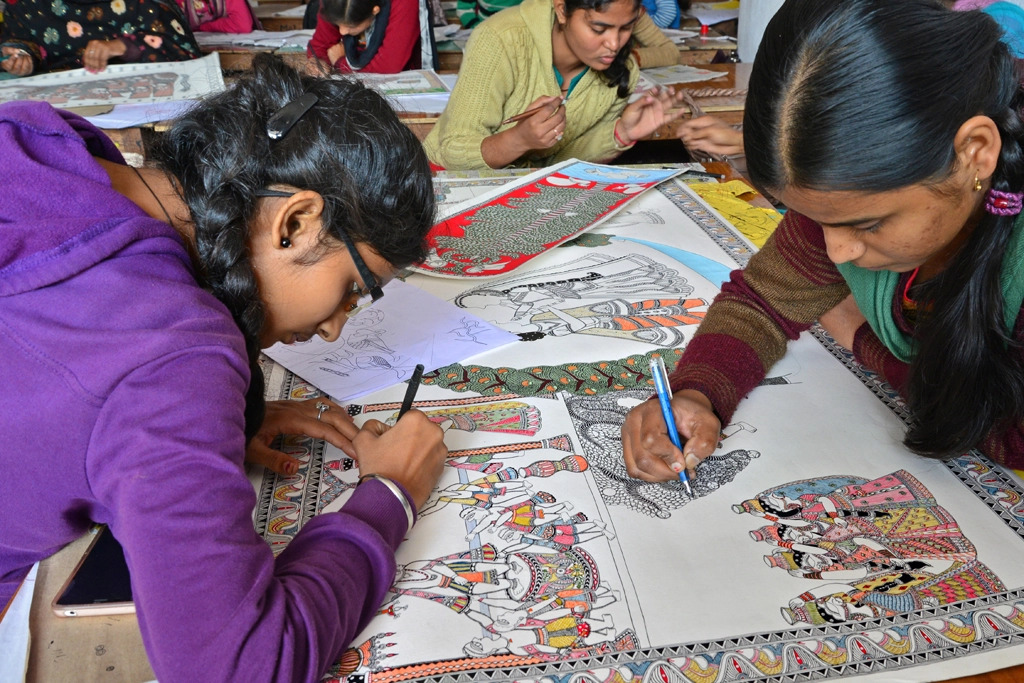
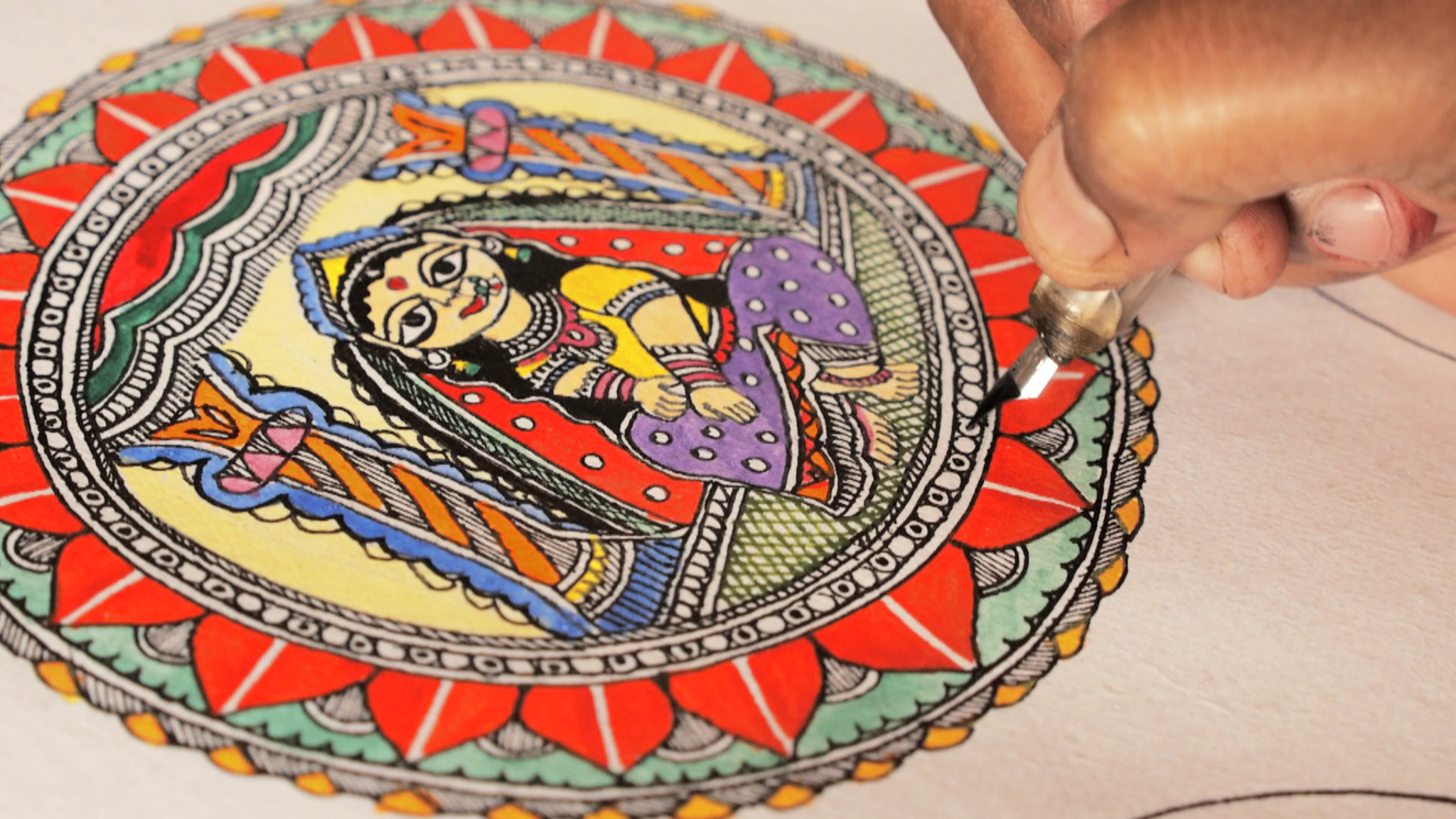
Mithila Art began as an ephemeral, largely ceremonial set of women’s visual practices and has developed into an internationally recognized art commodity through complex historical processes that I will not go into here but which Paula Richman discusses in her essay in this issue and the representational and extractive politics about which Hélène Fleury writes in her own essay in this issue. At a professional conference in 2014, I met two key supporters of Mithila Art, David Szanton and Parmeshwar Jha, both of whom encouraged me to undertake research about the connections between Mithila Art and Maithil women’s oral folklore, with the sadly now shuttered Mithila Art Institute in Madhubani as a host institution for the project. Forces of modernization—such diverse factors as expanded formal schooling for girls and changes in house construction materials—and globalization—for example, access to global media and other vectors of global capitalist reach—have eventuated in very few young Maithil women today learning to paint in the traditional way, from elder women in their families and villages.
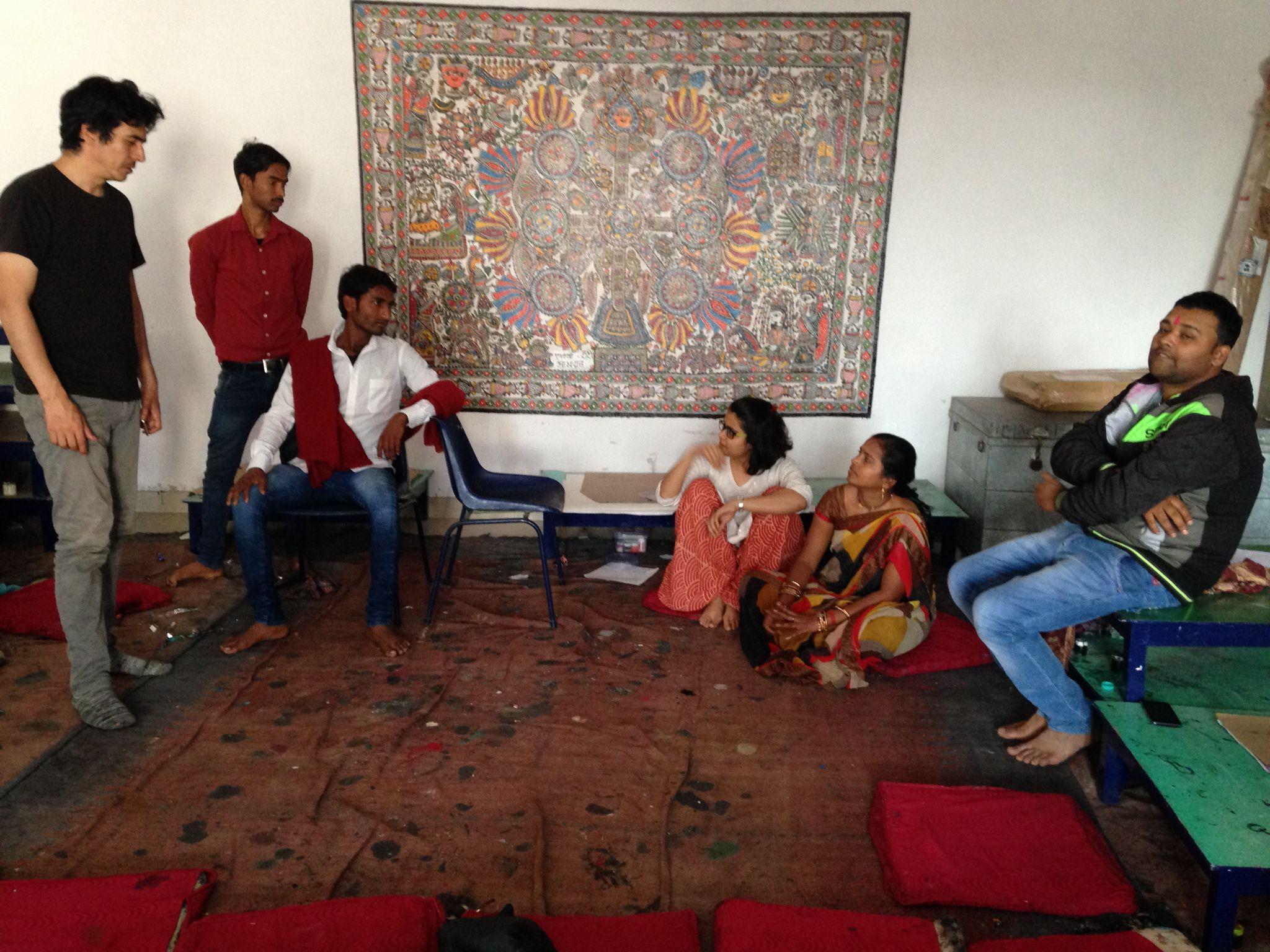
The Mithila Art Institute (hereafter MAI) was established in 2003 to train and encourage the development of a new generation of Mithila artists, who would hone their craft there under the tutelage of accomplished artists (see Figure 2). MAI, several of whose key, foundational benefactors were relatively elite men—Maithil and foreign—was, nonetheless, by design, a gender- and caste-liberatory space in at least six ways: (1) it was a public space where Maithil women and girls were encouraged to grow their literal and figurative voices, where boys were encouraged to treat girls as equals, and where these same boys were encouraged to learn a traditionally female (and therefore traditionally low-prestige) art and take on a profession outside the traditional masculine sphere; (2) it was a high-quality, virtually free training (including transportation subsidy) in a potentially lucrative occupation; (3) student advancement in education was based on aptitude and effort, not on political or familial connections or bribes;[4] (4) by the time we worked with students there, the experts from whom students learned were mostly women artists who were treated with significant respect; (5) it was a space where traditionally cloistered girls and women interacted with people of many backgrounds from many parts of the world, and where they had the opportunity to realize that these outsiders were curious about their lives and impressed by their abilities; and (6) it was a space that encouraged and enabled at least to some degree—across caste, gender, class, and generation—cooperation, collaboration, and mutual moral support, alongside competition. Indeed, it was a project that harnessed women’s often hidden forms of traditional cooperation within and across households and turned these into a broader value and practice in the public sphere from which women have been otherwise historically excluded. My own project intersected with the aims and efforts of MAI by engaging its (largely female) students and staff to strengthen the links between their artwork and the stories of their own community and culture, thereby expanding the scope of cultural preservation, culturally relevant community development, and girls’ and women’s empowerment.
.png)
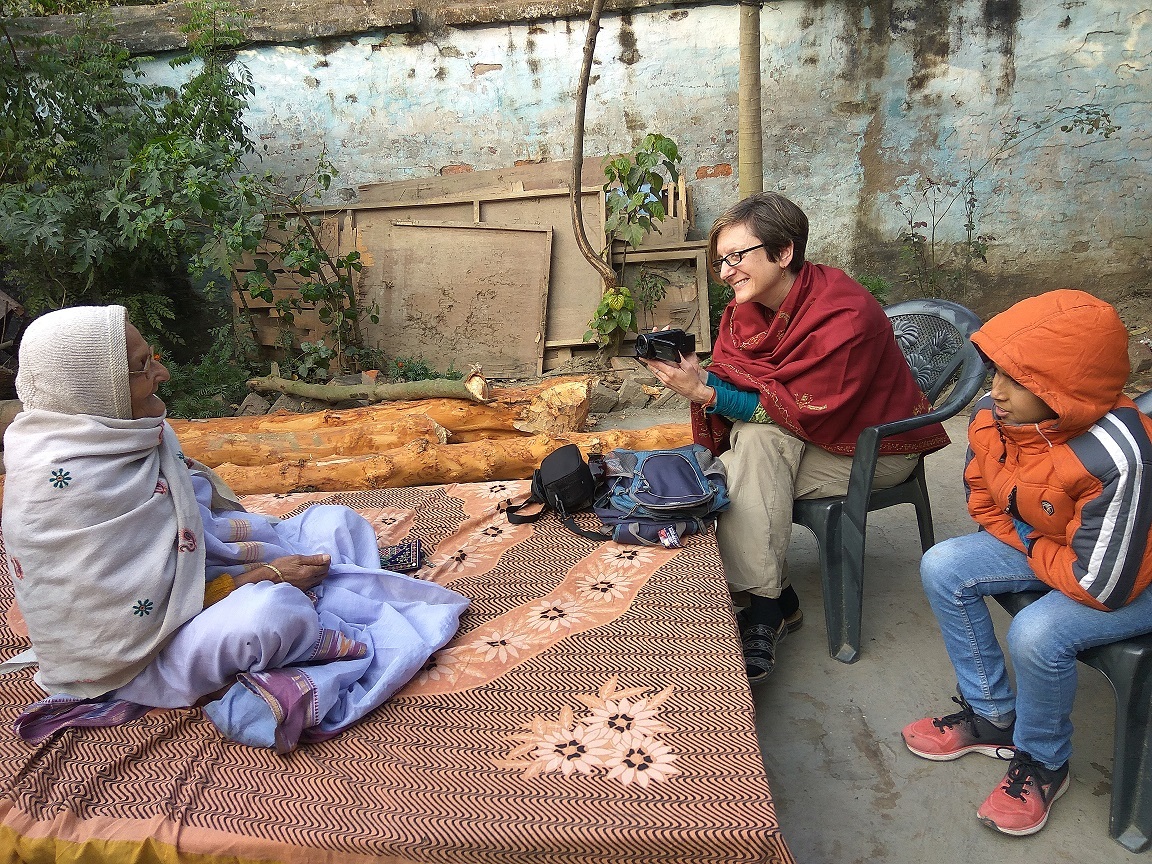
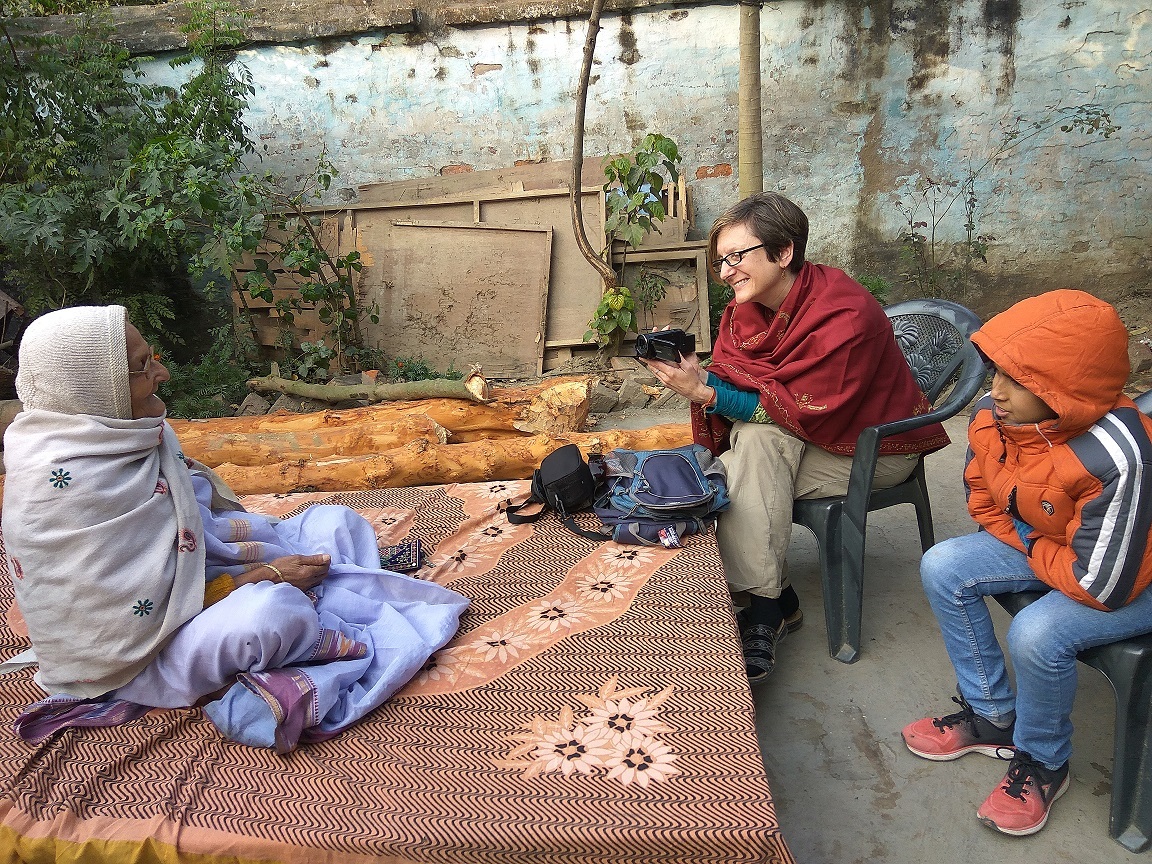
Once this host institution was established, I went about assembling a research team, having in mind that I wished to work closely with both a documentary filmmaker and a Maithil research partner. I was committed at this stage to creating public scholarship for a broad set of audiences rather than for a small set of specialized academics. The assemblage of the central research team for my project was, in my view, both highly desirable and largely fortuitous. Knowing of my interest in making a documentary, a friend from my graduate school days had mentioned filmmaker Carlos Gómez, who immigrated to the US from Colombia as a teenager and who now resides in Taiwan (see Figure 8). Gómez’s filmmaking organization Cineminga aims to bring awareness to marginalized cultures and the stories and concerns of people who sustain them. After a few conversations, Carlos and I realized our interests were well aligned and skills complementary, and so we decided to work together. Essentially, I would bring to the project language skills, transnational feminist perspectives, and familiarity with Maithil culture and society, and Maithil women’s storytelling in particular, and Carlos—who had not previously spent time in India—would bring his expertise in documentary filmmaking and in enabling marginalized peoples to tell their stories from their own perspectives to a wider audience through the medium of film.[5]
I also felt it important that our team include someone of Maithil heritage, ideally a woman, who was invested in overlapping purposes and interested in similar questions. Shortly after Carlos and I joined forces and began planning an extended period together in Madhubani, I received an email from a young Maithil woman named M. S. Suman, who was based in Delhi (see Figure 8). Suman had found some of my scholarly publications online and was surprised to discover that an outsider had bothered to learn about women’s storytelling in her culture of heritage and had, she felt, understood it well. Suman, who had grown up with the women’s stories and paintings of Madhubani, was then a graduate student in English Literature at Delhi University who had become weary of attending so closely to stories of people living in other times and more powerful societies. In an email that she sent me on March 24, 2015, Suman wrote, “After spending five good years with Chaucer, Milton, Dryden, Pope, and other ‘English’ canons I have developed this immense urge to run back, move back to those folktales. . . . I am planning to proceed with my research in Maithil culture” (Suman 2015). As a young, self-defined feminist Maithil woman living in Delhi, Suman bridged cultures and languages so perfectly that ultimately the three of us decided she would not only make a terrific member of our research team in Madhubani but also be a perfect central narrator; indeed, her story is part and parcel of the resultant film, Sama in the Forest.[6]
One of my published articles that had resonated deeply with Suman provided a description and analysis of the Maithil women’s annual festival of Sama Cakeva (sāmā cakevā) (Davis 2005). The story that provides a backdrop for the Sama Cakeva festival is rich with information and perspective on gender roles, family relations, and divine intervention, among other subjects. Like all tales shared in an oral tradition, this one has as many “versions” as tellers; indeed, one of the fundamental qualities of oral folklore is that it can be bent to uses and meanings that are context specific, individually invested, and shifting over time (Wadley 2003). Having recorded and analyzed numerous tellings of the story, I have been able to determine some of its most unchanging, as well as flexible features. Based on this familiarity, I summarize the tale of Sama Cakeva as follows: Sama is the daughter of the deity Krishna, who, in this story, is a king (rājā).[7] Sama is in the habit of going into the forest, according to some storytellers, with the purpose of serving a religious ascetic (such service, or sevā, being itself a form of spiritual devotion), according to others in order to commune with the woodland creatures, and still others claim that it is to meet with her lover. In any case, in the forest, Sama meets Cakeva, the son of an ascetic; some say he and Sama developed an “inappropriate” relationship, and some say their friendship was innocent. Which of these things is true is not as important as the report of impropriety by the king’s minister and confidante, a jealous would-be suitor of Sama, named Cugala. He reports to Raja Krishna that Sama has been acting inappropriately, which is all it takes for her father to condemn her. Raja Krishna does not bother to ask Sama to explain, for a young daughter’s voice is of no significance in this patriarchal, stratified, communitarian social context where family reputation, based in part on its female members’ chastity, is largely determinative of social status. Thus, Raja Krishna responds to Cugala’s accusations by cursing his daughter, turning her into a bird, and banishing her to the forest. All this time, Sama’s brother, Samb, has been away pursuing his education (or seeing to the kingdom, in some versions). In stark contrast to his sister, Samb suffers no surveillance nor judgment for his movements; in fact such movements are expected of him as a royal son. When Samb returns to discover what has happened to his sister, he becomes distraught. He performs austerities in hope that his efforts will release his sister from the curse, in some tellings to marry Cakeva. Samb’s penance eventually leads to divine intervention, and Sama is returned. Meanwhile, Cugala has set fire to the forest, but rather than destroying Sama and Cakeva, he himself is burned to death.
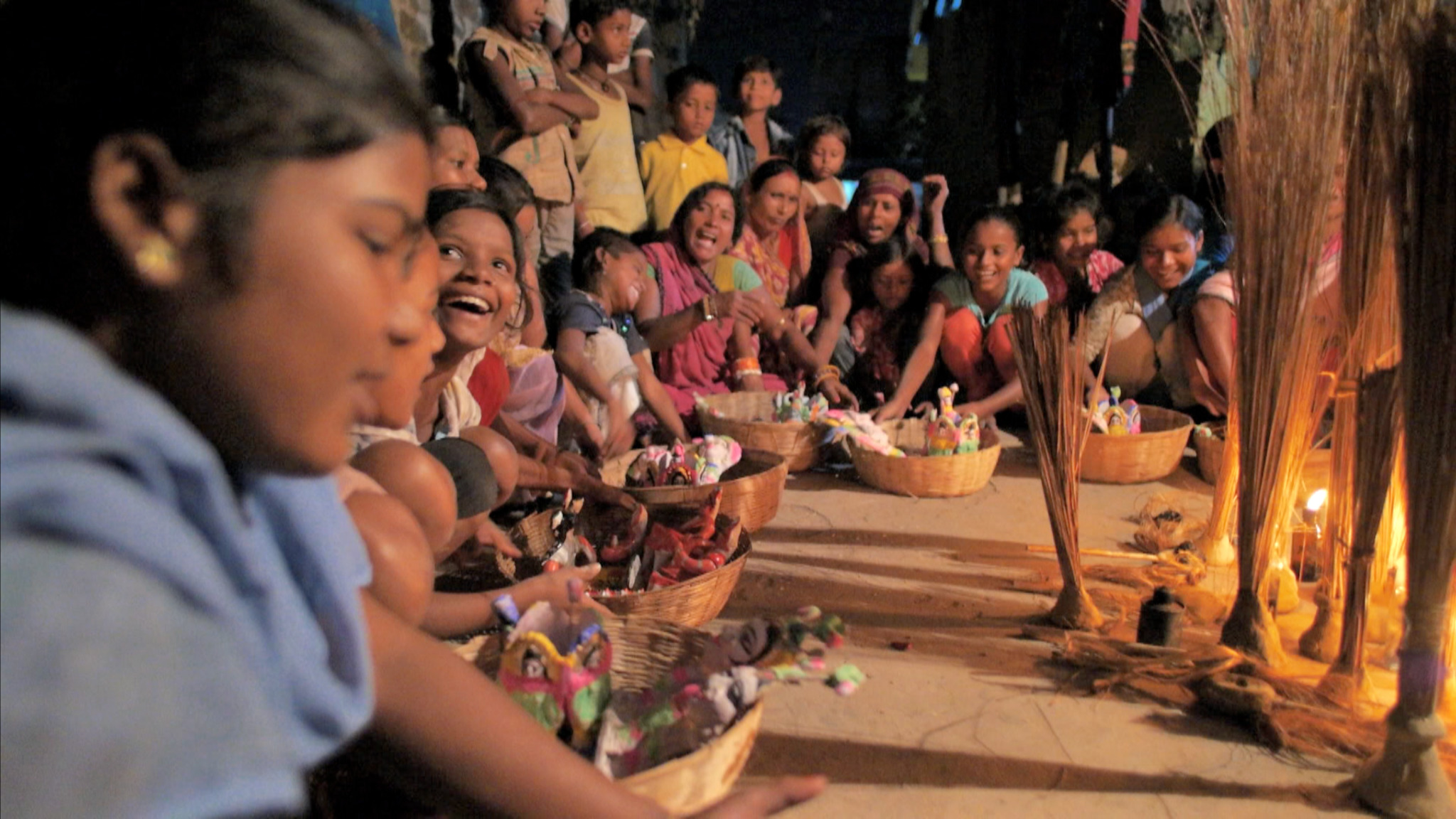
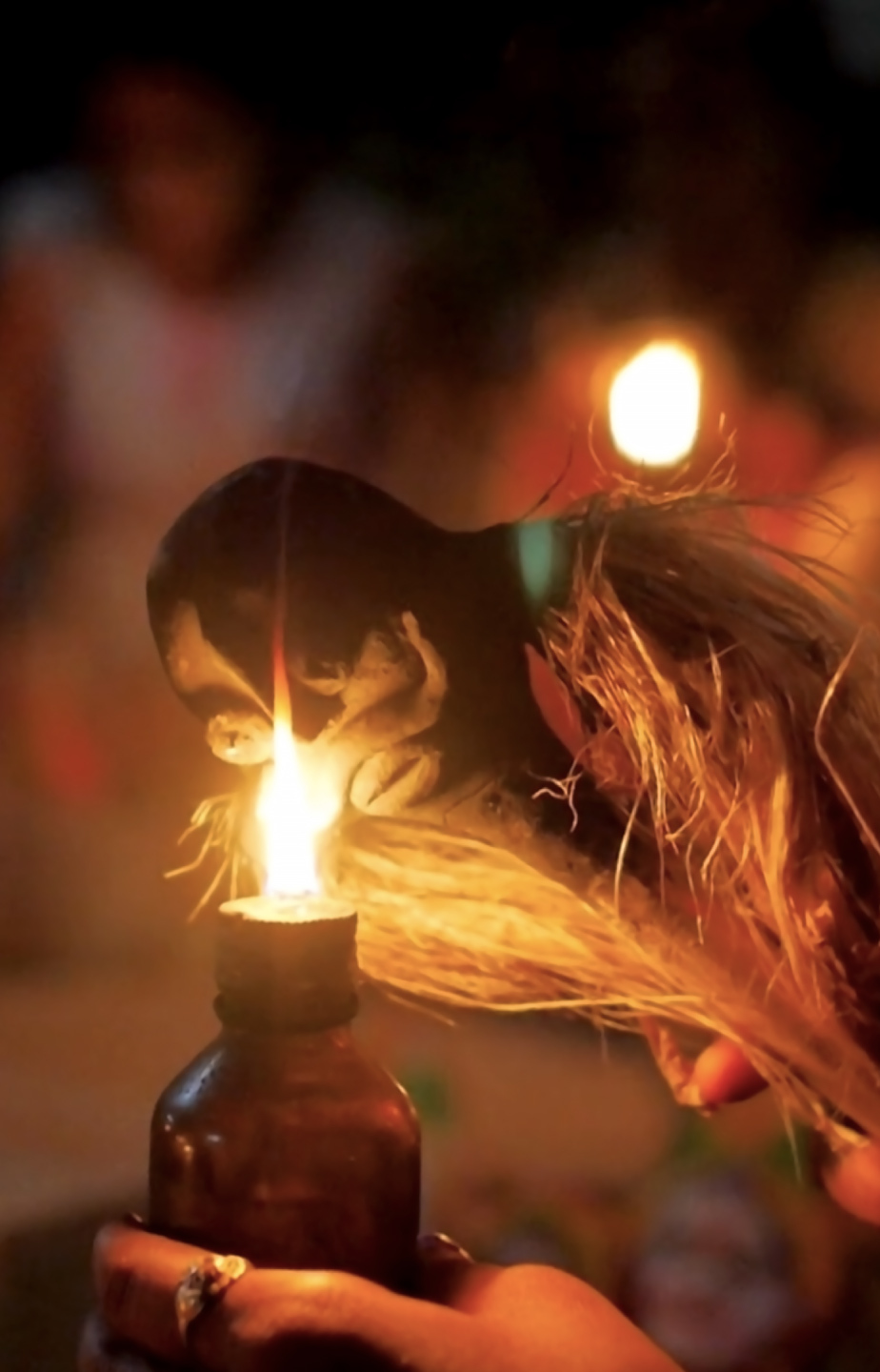
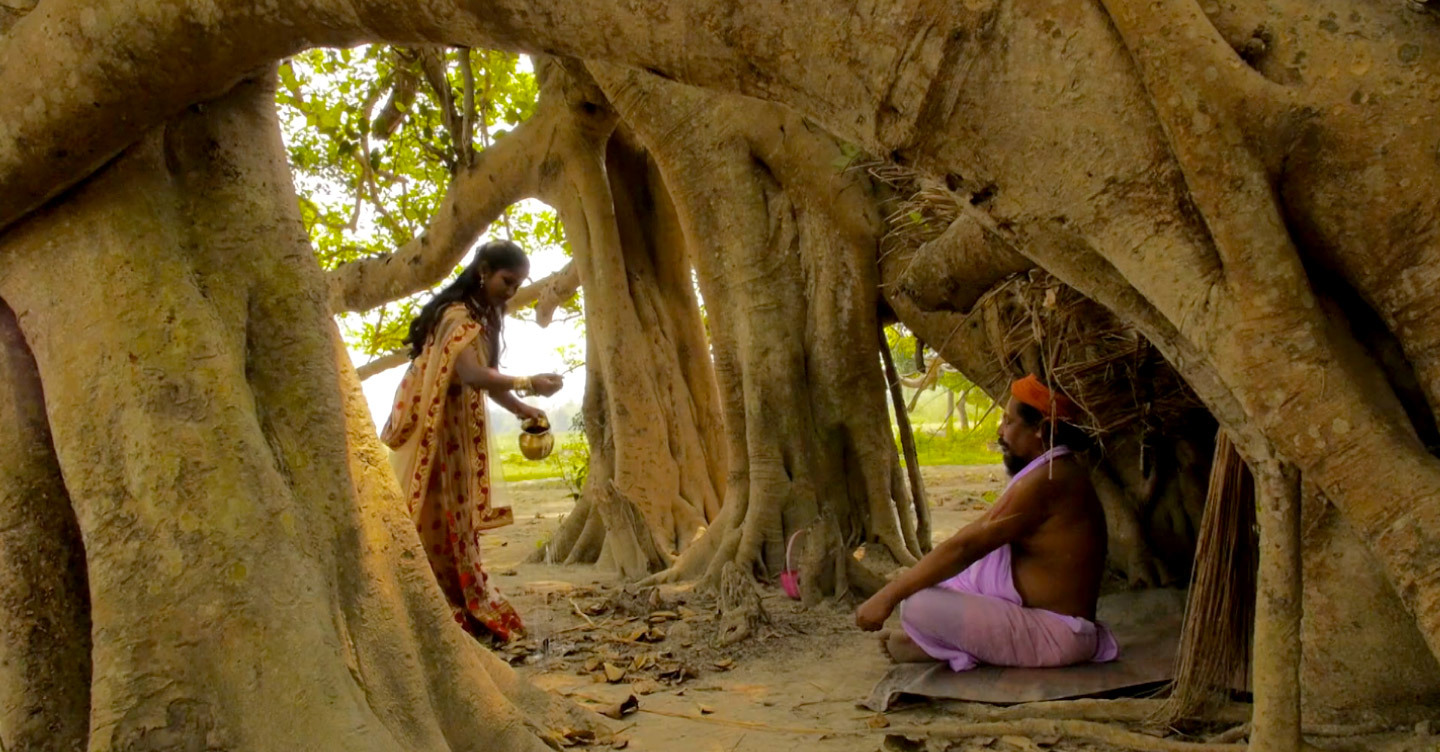
In the aforementioned article, published previously in this journal (Davis 2005), I wrote at length about the Sama Cakeva festival. Briefly, the Sama Cakeva festival is celebrated by women and girls over a fourteen-day period in the month of Kartik (October/November). It is timed to end on pūrṇimā, the monthly evening of the full moon. People of all Hindu castes in Mithila play Sama Cakeva. On each of twelve evenings in succession, girls and women join in the courtyards of their natal (or sometimes marital) families and neighbors to play Sama Cakeva (see Figure 3). “Play” with figurines representing characters in the Sama Cakeva story is integral to the festival—including the burning Cugala’s hair and face, as is the singing of songs (a) regarding the brother–sister relationship; (b) humorously ridiculing Cugala; and (c) otherwise sung exclusively in conjunction with the transfer of a bride from her natal to conjugal home (see Figure 4). On the final day of the festival, brothers of those who have been participating in the festival break the Sama figurine, an action signifying the brother’s liberation of his sister from their father’s curse. In the end, the figurines are carried in baskets to a pond, river, or field, where they are propitiated, provisioned for their “trip,” and discarded.
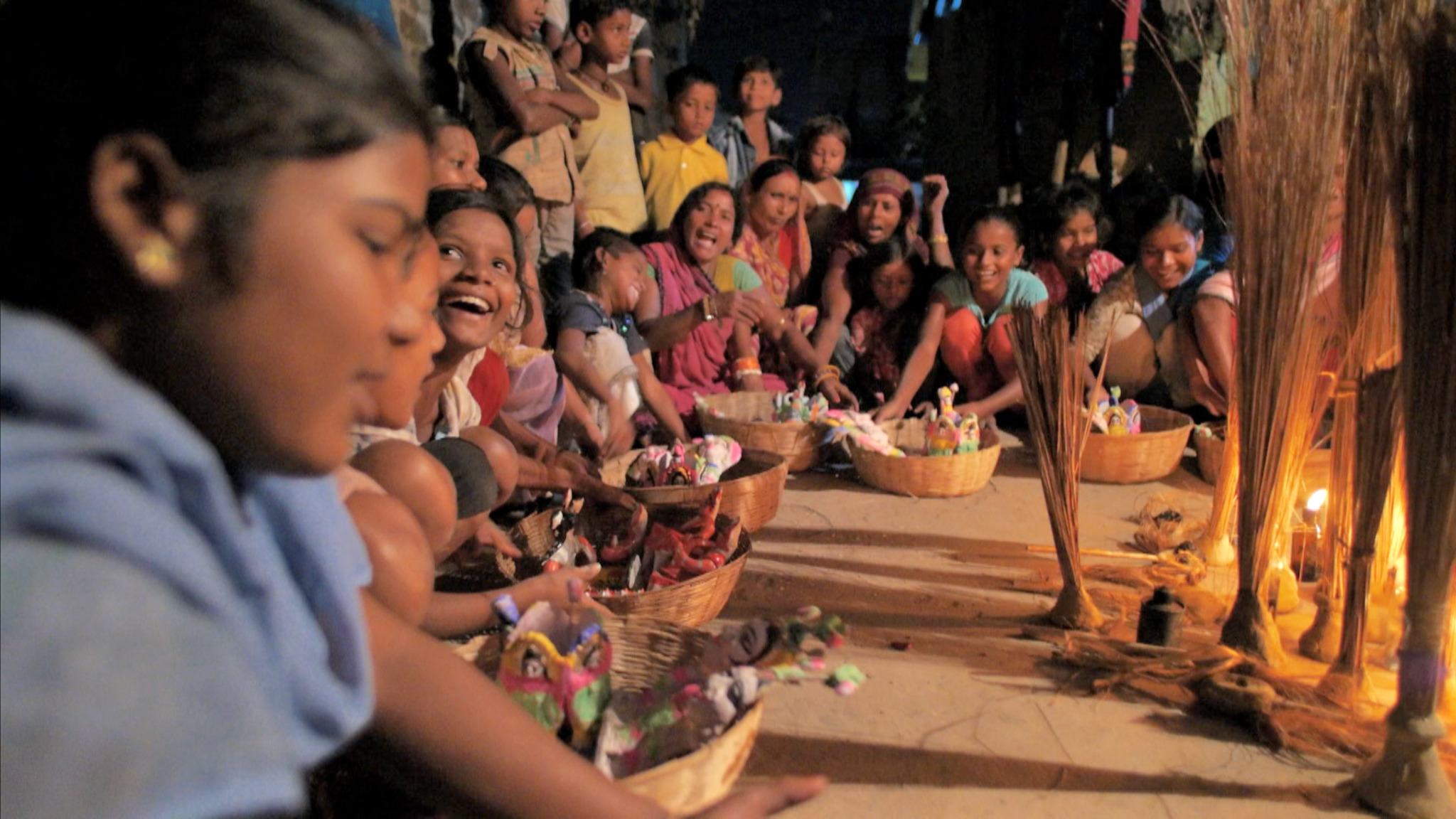
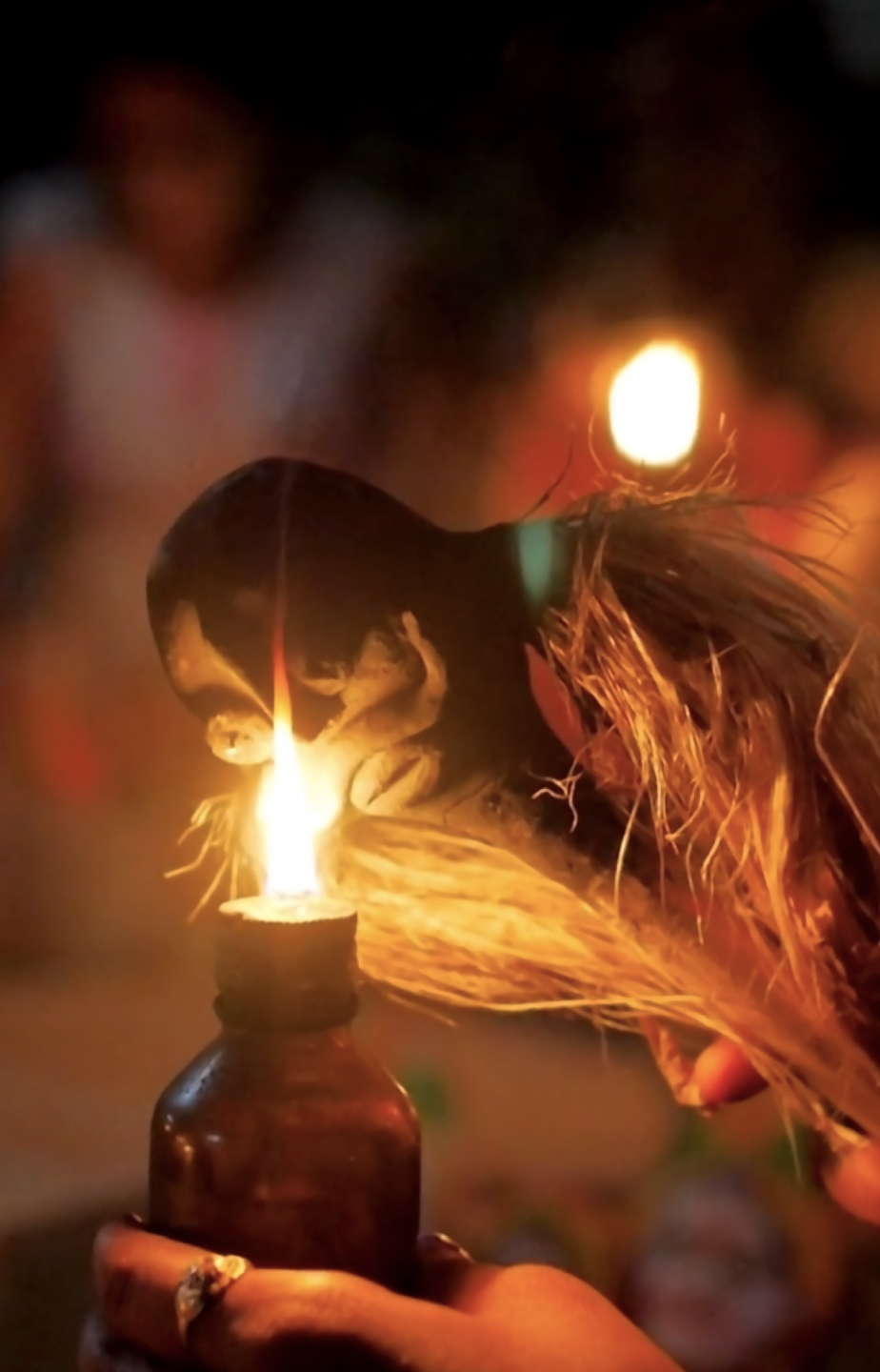
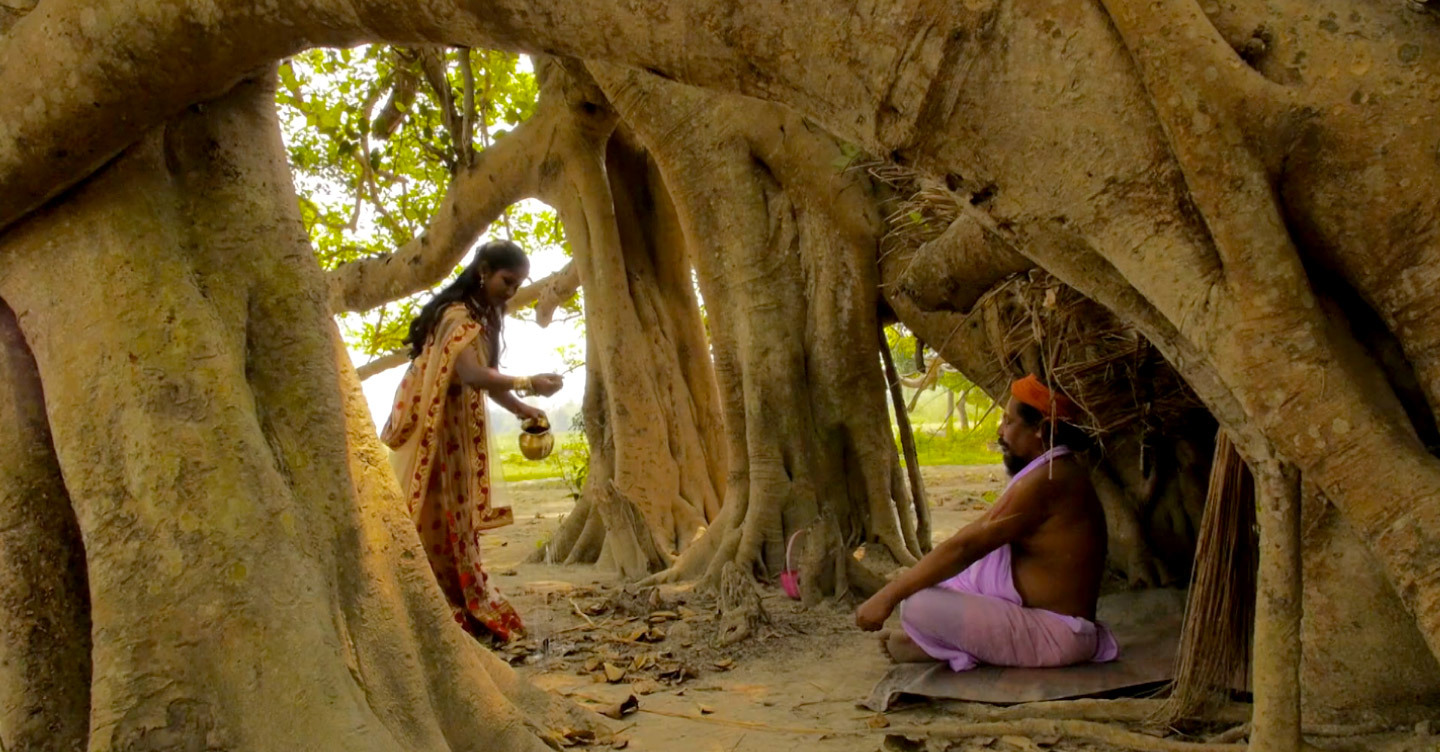
The story and festival of Sama Cakeva provide windows into Maithil women’s perspectives on family and community relations, gender norms, and the nature of divinity. As a women-centered and largely women-only festival celebrated in and across multiple caste communities, it is an arena for relatively free expression of social critique.[8] The festival functions as a space for criticism of disproportional cloistering of girls and women, surveillance of their behavior, and control of their sexuality. It highlights the power and harm of social surveillance and opprobrium and even raises the specter of an ambivalence on the part of women—due to the evident structural inequality—toward brother–sister relations, otherwise celebrated as inviolable. Since so much about the gendering of kinship, community relations, spatial mobility, access, and voice is embedded in this festival, it provides juicy territory for exploring contemporary issues of girls’ and women’s education, movement in public space, sexuality, voice, romance, and family relations. Because it is so good to think with, and because its multiple modalities increase interpretive contexts for exchange on issues of relevance to our research on social change, this story makes an ideal central thread for our film, Sama in the Forest.[9] The team, in consultation with our local contacts, decided to make Sama Cakeva—the festival, the oral tale that is its narrative basis, painting connected with the story/festival, and a staging of the story we as a collective undertook—the center post of our project’s process and filmic end product. That is, our project embraces the Sama Cakeva story aurally, visually, dramatically, and, ultimately, cinematically (see Figures 5 and 6).

The experience of collaboration with Carlos and Suman in many ways exceeded my hopes, although it also brought significant challenges. Here I will discuss several key factors that shaped our three-person collaboration. The first is the postcolonial context of India and Indian scholarship. Suman, Carlos, and I were all quite mindful of this context as a backdrop for our work with one another. This context impacted, for instance, Suman’s consideration of and conversations with Indian friends about whether and how to work with Carlos and me and what to expect from engaging with us as foreign researchers, including the possibility of exploitation (Suman 2021). This context also impacted decisions regarding my own place and voice in our film, as well as our everyday interactions. For instance, given the complex relationship between the field of anthropology and colonial projects, we made the representational choice to position me as a listener and learner in our film, rather than as an “expert.” To offer another example, I was very concerned that my own comportment and therefore reputation as a white American woman not negatively impact Suman’s standing in her family and community; I felt protective of her as an unmarried young woman, although she was then already in her mid-20s and living semi-independently. I dressed conservatively by local gendered standards and carefully (if sometimes clumsily, no doubt) navigated local social hierarchies so as to remain in good stead. Onto the postcolonial backdrop were layered our distinctly different skill sets, culturally informed differences in our experience of and styles of interfacing with members of the Madhubani community, and our commitment to shared decision-making in the process and multivocality in the end products. Suman, for instance, more freely judged community members’ behavior in relation to our project, such judgment no doubt inflected by her sense of what such behavior might look like through the eyes of outsiders such as Carlos and me. Carlos indicated that he found some resonance between the cultural and economic environs of his youth in Latin America and the environs of Madhubani, such that despite the fact that I had spent significant time in rural South Asian settings and he had not, he in some ways felt more relaxed there (Gómez 2021).[10] Our differences also impacted our ways of thinking about the politics of community member participation in the project and compensation for such engagement. I return to some of these points below.
Participation: Typology and Practice
So far, I have sketched out methodological influences, institutional contexts, narrative cultural threads, and the diversity of our research team. Before turning to on-the-ground relations with community members in Mithila, I next present a model for understanding community participation in a project of this nature that I believe will help discern its dynamics and stakes.
In her 2001 article in World Development entitled “Participatory Exclusions, Community Forestry, and Gender: An Analysis for South Asia and a Conceptual Framework,” Indian feminist development economist Bina Agarwal lays out a typology of participation (Table 1), which, from least to most empowering, she calls nominal, passive, consultative, activity-specific, active, and interactive (Agarwal 2001, 1624).
Agarwal’s framework recognizes that the ways community members participate in development initiatives contrived by outside entities (potentially in conjunction with inside entities) is framed through their access to what she calls “bargaining power,” noting that “. . . participation is determined especially by rules, norms, and perceptions, in addition to the endowments and attributes of those affected. These factors can disadvantage women, both separately and interactively. Women’s ability to alter them will depend on their bargaining power vis-à-vis the State, the community, and the family” (Agarwal 2001, 1633–34). It is critical to realize that not all women, even not all “local” women, are positioned with the same degree or types of bargaining power. Further, beyond governments and the more powerful in their communities and families, they (and others in their communities) may also be “bargaining” with additional powerful others, such as NGOs, filmmakers, and anthropologists bearing (often short-term) resources, opportunities, and risks.
Over our initial months together in Madhubani, Suman, Carlos, and I got to know an array of people in the city, as well as in the broader, mostly rural region, some of whom became part of our expanding project team. While I was unfamiliar with Agarwal’s framework at the time of our on-the-ground engagements in Madhubani, I already understood from anthropological and feminist studies—indeed from my own earlier research experiences in rural South Asia—that ethnographic, development, and other community-engaged work is inherently political in a myriad of ways, even when it purports not to be (Tsing 2005; Escobar 1995; Ferguson 1994). Agarwal’s framework provides an additional tool for interrogation of such relations. My assessment is that our collaborations and other engagements with people in the Madhubani area have ranged from consultative, through activity-specific, active, and interactive/empowering. The navigation on all sides were continual, complex, and in some instances more conscious and deliberately articulated than in others. I offer five diverse examples in what follows.
Example 1
One colleague in Mithila had a highly significant “consultative” participation role in our project. Kaushik Jha, the administrator of MAI, was that person.[11] Our team continually asked for Kaushik’s view on many things related to our stay and work in Mithila. Such consultation ranged from advising us about how to locate good storytellers, to making transportation arrangements, to finding props for film scenes, to discerning what food to provide at gatherings, to determining the amount of stipend to pay other participants, to discovering where (if at all possible) to find toilet paper in Madhubani! Kaushik’s participatory role entailed much more than consultation, however, as Kaushik actually himself arranged many such matters, in which cases it also constituted, in Agarwal’s terms, “activity-specific” participation. In addition, Kaushik did take some logistical decisions about with whom we would record storytelling sessions when or whom we would hire for particular services. Although he shared much knowledge, information, and opinions, Kaushik did not presume—and neither did we invite him—to jointly or singly make most significant decisions about the project. He was, nonetheless, very influential, as we depended on his knowledge and respected his perspectives, rendering him, according to Agarwal’s schema, an interactive/empowered participant. Further, although he did not ask for money in exchange for this participation, he may have anticipated it, and we did offer him a sum at the end of our work together, which he gracefully accepted, thus profiting him in material terms.
Example 2
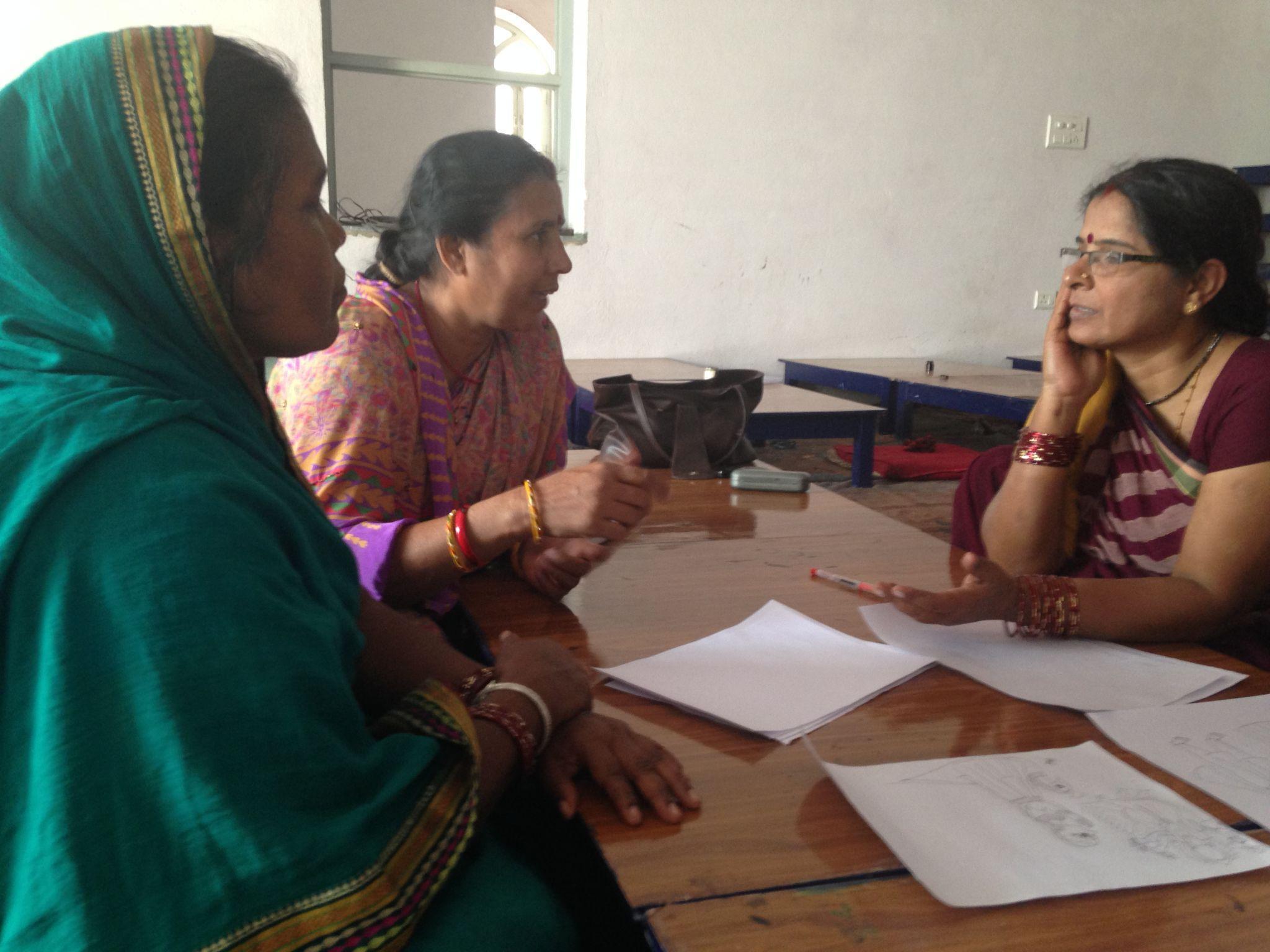
Beyond Carlos, Suman, Kaushik, and I, several other participants engaged in what Agarwal would call “active” and “interactive (empowering)” participation. Most prominently, Carlos, Suman, and I engaged a range of community members in a filmed production of the Sama Cakeva story (outlined above). We started with a workshop run by Carlos with Kaushik as primary translator. We invited approximately fifteen community members to join us, including several students, a rickshaw driver, accomplished Mithila-style painters, local actors, and others, representing (purposefully) a range of caste, class, age, and gender identities. Together, the group deliberated (given that there are so many variations) to create the storyline, envision which scenes to enact and how, practice the scenes, assemble costumes, determine and set up shooting locations, work out logistics, and so on (see Figure 7).
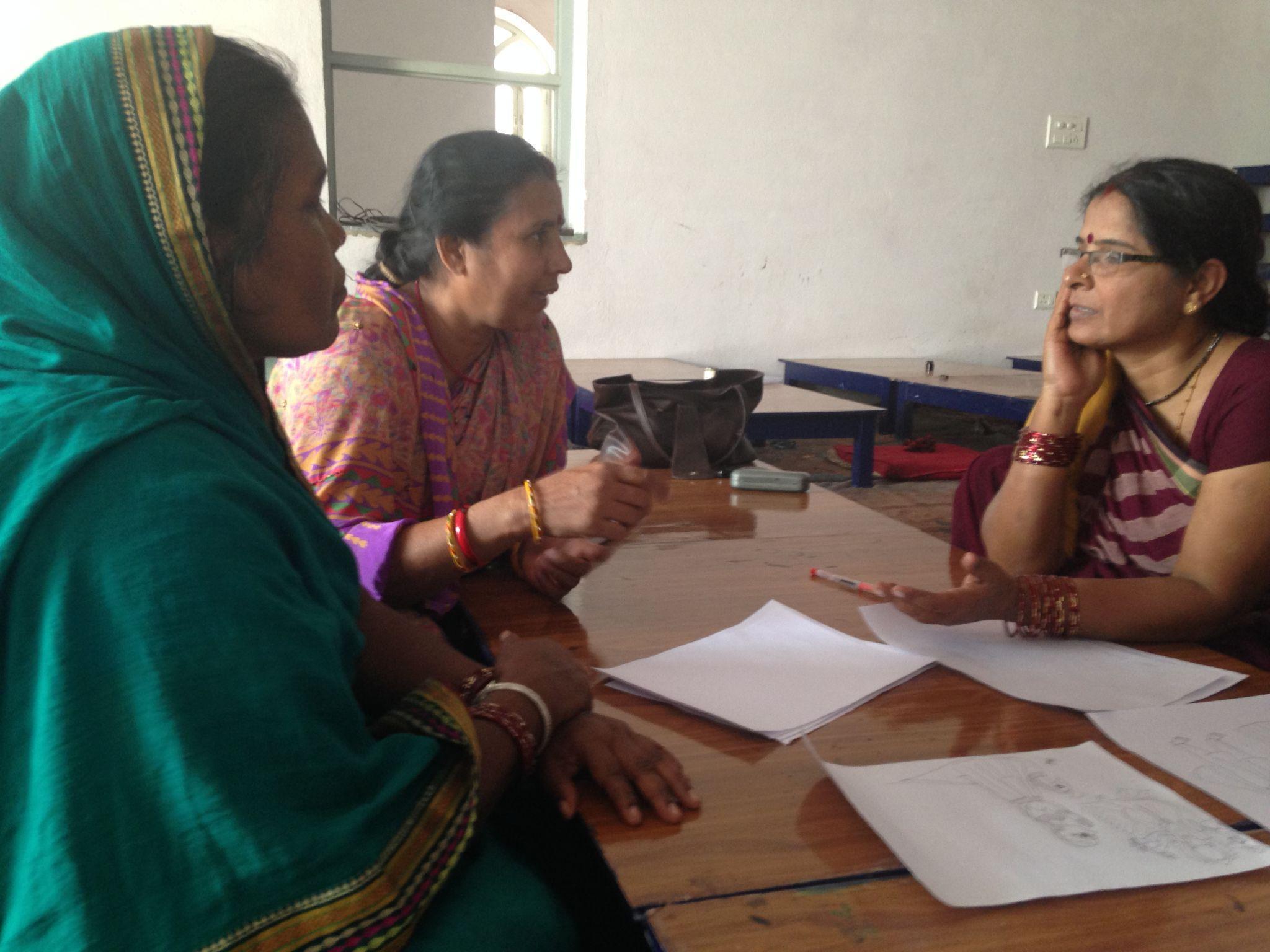
The stages of this process were filmed (mostly by me), as was the final enactment itself (by Carlos). Carlos, Suman, and I made most of the casting decisions with a bit of input from others.
We made a point to feature people of so-called lower-caste identity in several prominent positions, while those playing across from one another as the two royal couples in the story were of different castes (whereas in Madhubani inter-caste marriage is still largely condemned). While caste identity was not always obvious to us as outsiders, we could make such discernments based on which (caste-based) neighborhoods people lived in and sometimes based on what surnames they used (although the latter is not a fool-proof way to discern caste identity in the region—caste having complex dynamics of rigidity, flexibility, and manipulability). This arrangement was not intended to be evident to non-local film viewers; it was more a dynamic arrangement of potential impact to the local community itself. (Even if local viewers did not personally know the people playing the roles, they might glean caste identity in some cases from actors’ names in the credits.) The participants practiced the scenes together with Carlos’s direction, providing one another feedback and encouragement (see Figure 8).
__suman_(seated_in_white_blouse)__and_other_participants_discussing_and_p.jpg)
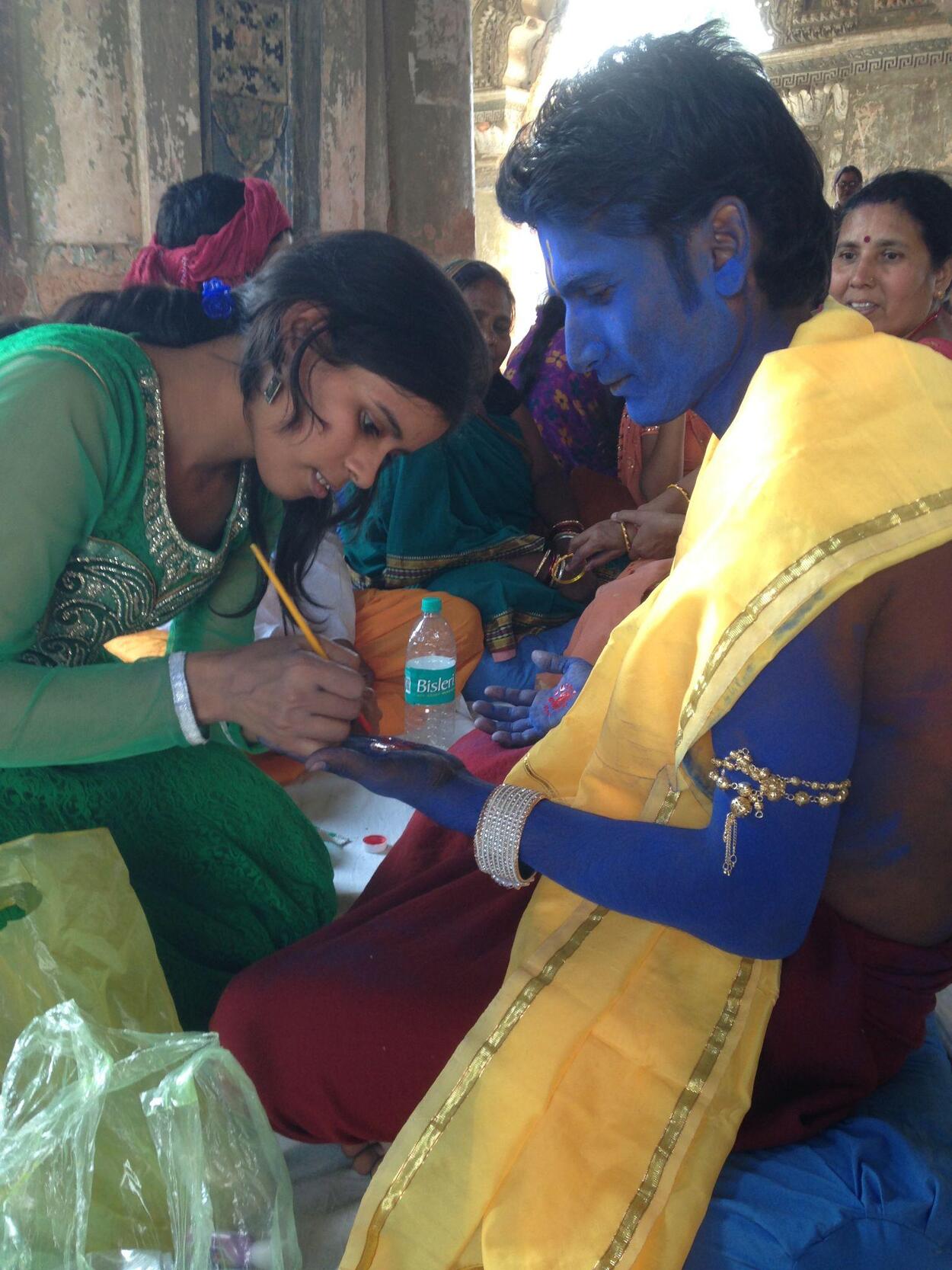
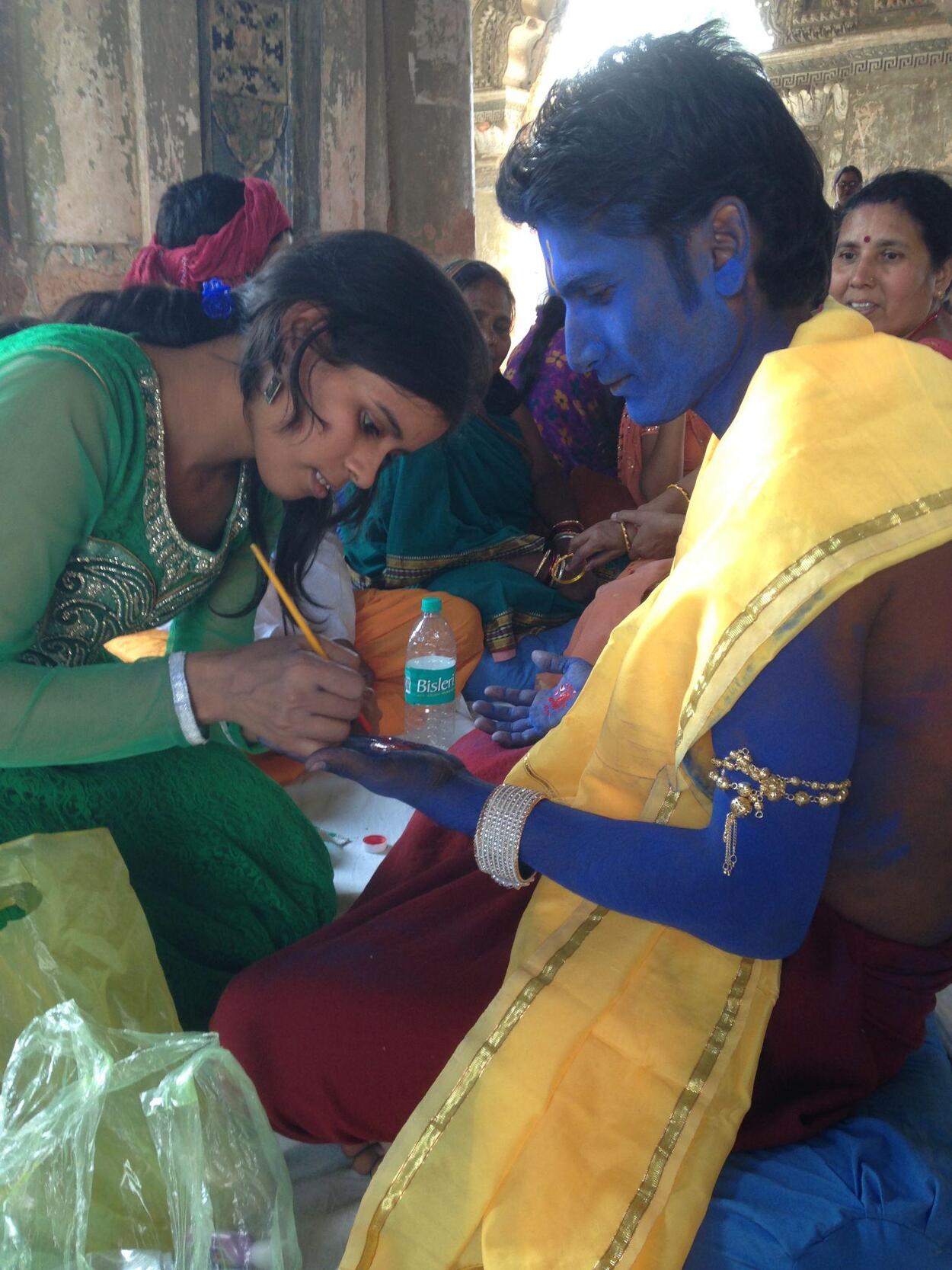
One participant took a non-acting role as costume designer, which meant that she got to shop (using my funds) in the local market for pieces of costuming ranging from blue body paint to a fake peacock feather (see Figure 9). Another helped with crowd control during filming in public locations. With Carlos filming and directing, together we shot many takes of all the scenes, under often rather grueling conditions but usually with collective good cheer. This range of activities blurred the lines among “activity-specific,” “active,” and “interactive or empowering” participation, in the terms of Agarwal’s schema.
Example 3
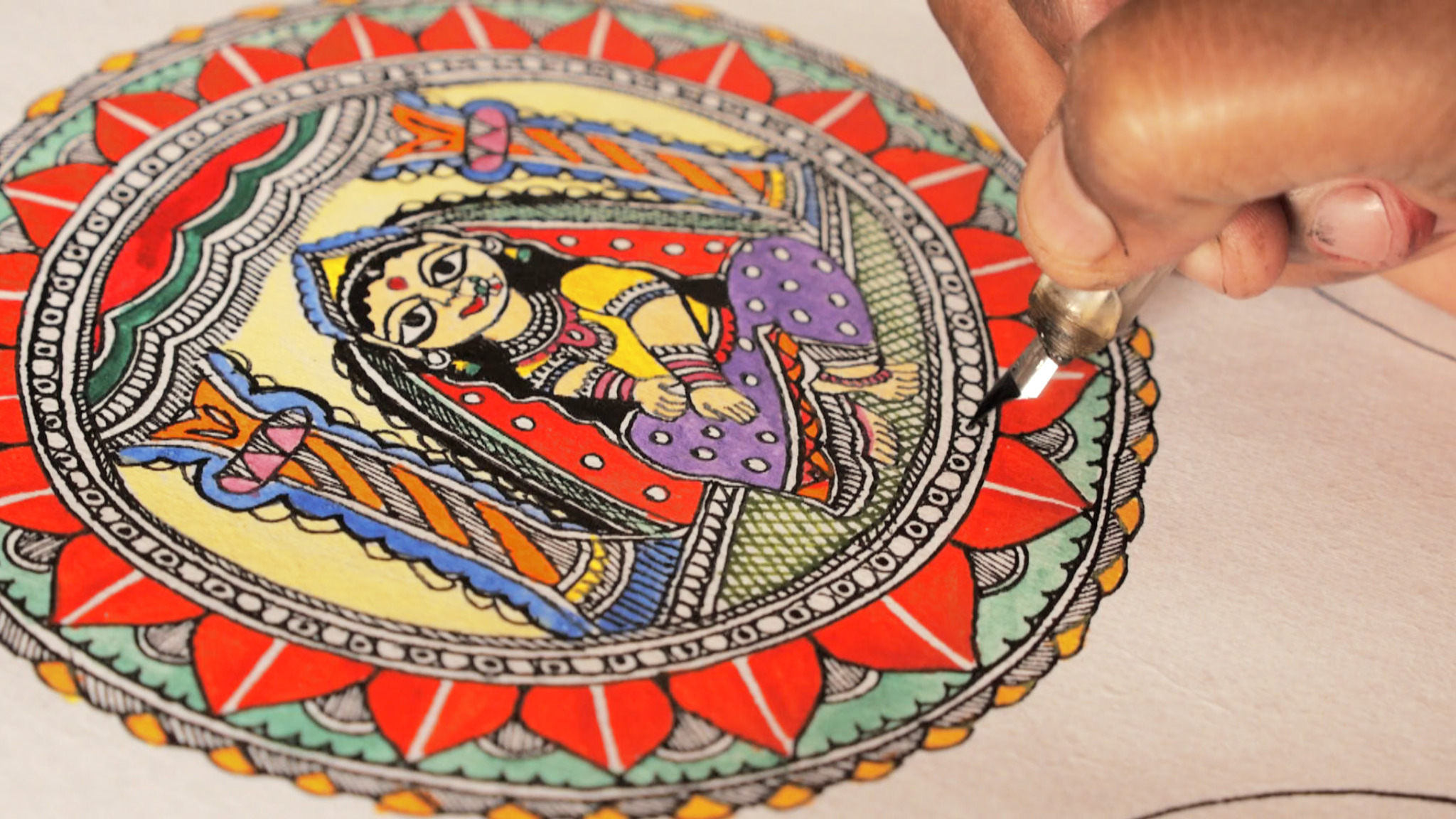
A further example of “activity-specific” participation is the undertaking of particular tasks related to our project. This occurred when I asked the highly accomplished artist, Vinita Jha, to make a painting depicting the characters of the Sama Cakeva festival in a relational fashion by appropriating the locally familiar kohbar imagery traditionally drawn on the wall of the marital chamber of higher-caste Maithil households. I came to her with the concept and she brought it to life, making the vision her own within the suggested parameters. It was more detailed and beautiful than I had imagined it could be (see Figure 10). In this sense, her participation bordered on “active participation” rather than the more attenuated “activity-specific” participation. What’s more, while I thought this painting would be one of a kind, Vinita and her daughter Nisha, also a fine painter, subsequently created for general sale additional original paintings of this type, in this way leveraging their participation in the film into something of additional value (monetary gain) to their lives.[12]
Example 4
Another concerted decision we took related to discussions of power and influence was for Carlos and me to return to India two years after our initial research period there in order to screen a rough cut of the film. This reflected an ethical commitment to ensuring feedback from the film participants and Madhubani community members and input from Indian filmmakers, artists, and other intellectuals, as well as students and the general public. Thus, we set up one screening at an art gallery in Delhi, which was organized through United States–India Educational Foundation/Fulbright connections, and another in Madhubani, the latter organized by Kaushik on our behalf and hosted by Carlos and Suman, as well as myself. We filmed both screening sessions with the intention of potentially incorporating some of this screening footage into the film, as an additional way of keeping the cultural representation/interpretation open and multivocal. We received a lot of positive feedback on the rough cut. At the Delhi screening, we also got some advice about minimizing my filmic presence and “ethnographic” voice in the film, which we interpreted as a decolonial stance, advice we took when making further edits to the film. At the Madhubani screening an argument ensued among participants about whether there was a singular correct or respectable version of the Sama Cakeva story and if so whether it was our responsibility to portray only it. It was a male participant who argued for one correct version, while others, primarily women, expressed an interest in representing the extant multiplicity of versions, something notably inherent to women’s oral traditions. These screening events were a further example of interactive, empowering participation, where attendees had voice and influence, in this case the filmic representation of their culture.
Example 5
A form of participation that created temporary discomfort for Carlos, Suman, and me occurred when we learned from Kaushik that the group participating in the filming of the Sama Cakeva story dramatization decided to demand payment for their time and effort. This news was initially received by Carlos, Suman, and me with a sense of disappointment that the participants did not see sufficient value in and of itself in the opportunity to take part in the film production.[13] Yet, upon reflection, and with the heuristic support of Agarwal’s schema of participation, I now see this as an unanticipated practice of “interactive” (empowering) participation, what Agarwal identifies as collective “bargaining power” vis-à-vis our three-person team and facilitated expertly by Kaushik so as to appease all parties and ensure that no one jumped ship in a project in which he himself was invested.
Conclusion
The methodologies chosen and carried out in this project were suited—as best we felt we could muster at the time—to the aims of ethical, impactful cross-cultural collaboration across vectors of identity and power, with a recognition that participants bring different assets, needs, and desires to the collaboration.
Politics—in the sense of the circulation of power—has been embedded throughout this project from its inception to its methods to its products. At every turn—from the original vision of an American feminist anthropologist to the transnational dynamic among the core project team, to the interactions between that team and the larger set of diverse community members who pushed and pulled at the project, adding interpretations orally, visually, and through story dramatization—this project has been political, laced with global hegemonies, gendered and caste-based resistances, and the question of which audiences/users would take up (absorb, reinterpret, recontextualize, etc.) the “products” (film, archive, online educational site), how so, and to what ends. Ultimately, in undertakings such as this one that bridge vectors of social inequality that are at once localized in their particularity and global in their structure, I would argue that some reinforcement of existing power dynamics is inevitable, and yet many options exist to mitigate and even enact small victories of reversal in those dynamics, mitigation and victories that may eventuate in longer-term effects. Such victories entail overt collective bargaining (for example, for better compensation), as well as more subtle effects (for example, “disturbances” in caste orders, gender narrative reworkings and reinterpretations, and storied recontextualizations), potentially unsettling or at least challenging national and global discourse regarding the estimation or “invisibilization” of a community at least some of whose members are eager to tell their stories in their own words and practices to a wider world.
As noted earlier, at the time I was originally formulating the project plan, I was unfamiliar with Agarwal’s critical frameworks regarding “participation.” I think, rather, I intuited a range of participatory orientations and sought to make community member and core team member participation and collaboration as interactive/empowering as possible while, frankly, never fully giving over control of the larger project vision that I created as a Fulbright proposal a year prior to the undertaking. This control was affected materially by the fact that I used my Fulbright grant, and institutional and personal funds, to finance the entire undertaking, as well as by my status and prestige as a white American academic, which likely mitigated against any demands for fully shared decision-making.[14]
What Agarwal’s framework for and critiques of “participation” have enabled is a systematic reflection on the ways in which we constructed participatory options and thereby more, and less, shared power during the fieldwork project phase and beyond. For me, two take-home points from this exercise are that the typology developed by Agarwal has great heuristic value in project design, execution, and assessment, especially for those who wish to support the empowerment of oppressed groups or communities. For maximal effectiveness, such power-sharing should certainly be incorporated from the earliest phases of project formulation. Nonetheless, and as a second lesson, one may find, as I have, that the types of participation Agarwal outlines are overlapping and fuzzy at the edges, especially given that social positionality is so very complex and contextual, that humans inevitably act with both individual and collective interest in mind and also with limited self-awareness and mutual understanding.
For Agarwal, participation is of most use when it can be harnessed for the creation of greater equity, efficiency, and sustainability, none of which are a foregone conclusion (Agarwal 2001, 1635). Writes Agarwal, “The bargaining power of such a group is likely to be higher the larger and more unified it is, the more the political weights of which it is composed, the greater its command over economic resources, the more the support it can muster from gender-progressive elements within the state and from NGOs, the media, academics, and international donors, and the more State officials are influenced by gender-progressive ideas” (1642). By using my own status and resources to bring greater attention to Maithil women’s lives and stories, and by promoting the notion that women’s storytelling is itself a form of counter-hegemony and a practice of women’s solidarity and culture-building, by bringing together diverse community members to participate in an exploration of this truth, by preserving women’s stories through film and public archive and assisting in its dissemination by developing and making available instructional materials, it is my hope that I have helped, however partially and imperfectly, to create new contexts for the bargaining and harnessing of which Agarwal writes, while minimizing, at least to a degree more than I have in past research efforts, the power-play of appropriation of Maithil cultural resources. My choice to take part “across hierarchies of geopolitics” (Tambe and Thayer 2021a, 1) in a collaborative and diverse team and to create a context for participations “interactive” enough to lower my own control and enable others to influence outcomes—aesthetic, interpretive, and resource-laden—has, to an extent, entailed and constituted “world travelling” whereby I perceive (and facilitate perception) of others as subjects, while gaining understanding, in turn, of myself as a likewise evolving subject in networks of power, one with increasing commitment and capacity to loosen the reins of control that attend my privilege in order to make room for the greater influence of and flourishing for others, opening up “the possibility to develop imaginative and actual relationships of solidarity that neither obfuscate nor remain paralyzed by those relations of difference, distance, apartness, and inequality within and through which feminism has traveled” (Roy 2021, 85).
As we in Critical Mithila Studies move forward in our collective efforts to both broaden and sharpen our sense of what constitutes the field, we must keep thinking about which questions and voices count, and which methodologies and methods increase our capacities to listen to, hold up, and engage marginalized perspectives.
My co-guest editor and contributor to this special issue, Pranav Prakash, has been an integral part of this project.
Such a brief outline of familial gender relations cannot do justice to their complexity but is still important background information for understanding the cultural frameworks that undergird the dynamics and “politics” of the participatory framework of the project analyzed in this article.
All photos in this essay are by and courtesy of Carlos Gómez, unless otherwise stated.
This statement is based on the value assertions and my personal familiarity with those running MAI, as well as on my own observations of the application and educational process across several months.
Carlos Gómez is the founder and director of Cineminga International-Fundación Cineminga (http://cineminga.org/). “Ethnographic” documentary filmmaking is a long-standing and currently ascendant methodological approach in the anthropological field, whose main association is the Society for Visual Anthropology within the American Anthropological Association (https://svafilmandmediafestival.org/).
Sama in the Forest is distributed by Documentary Educational Resources (https://www.der.org/). The website for the film is https://samaintheforest.bucknell.edu/.
With diacritics it is spelled Kṛṣṇa in Sanskrit and Maithili.
Women in this region engage in many festivals and rituals. Sama and Cakeva is set apart from others by the combination of its virtual exclusivity to women and girls as ratified participants, its centering of an unmarried female character, its non-reference in scripture, its participatory inclusion of multiple castes, its absence of priests, and its celebration at night in outside spaces.
The title of the film marks the liminality of life beyond social and structural bounds of the settlement.
Part of Carlos’s level of comfort was surely supported by his gender.
As mentioned above, the now-shuttered MAI operated as the institutional hub for our project.
Two additional paintings were commissioned for the film. One was completed, as part of their training, by four students at the Mithila Art Institute. The other, a kind of self-portrait, was completed by the artist, Ranjan Paswan, who played the role of Raja Krishna in our film’s enactment of the Sama Cakeva story.
Indeed, Suman expressed actual anger and embarrassment (as herself a Maithil) at participants’ demand for payment. She was surprised when I suggested, in response, that it was reasonable for people, particularly those with few resources, to demand compensation for their time and effort. This difference in perspective certainly represents our quite different positionalities vis-à-vis engagement with Maithil community members in Madhubani.
The closest to equal power sharing I experienced was no doubt with Carlos, who as film director exuded skill and knowledge I did not have (not to mention providing his own equipment)—in other words, who exuded formidable bargaining power, rendering my own power and decision-making in the filmmaking process somewhat attenuated. Carlos, however, was dependent on me for the film’s finances throughout, and he exuded a collaborative spirit in seeking my input in editorial decisions, which he discerned as appropriate to my role as producer and my cultural and linguistic knowledge as an anthropologist. Carlos and I had more than one discussion about our differential relationship to the resultant film—as a work of art and as a commercial product, the question being “whose film was it?” While we did not see precisely eye-to-eye on this matter, we did come to a better understanding of each other’s perspectives and came to an agreement in practical terms. Our collaboration continues.